Madness at Midnight is an area-control game in the Cthulhu-verse for 2-4 players, designed by Mads L. Brynnum and Richard Launius (surprise!), published by Mr. B Games.
What, another Cthulhu game??? I’m starting to sense a trend…
Just as in Fate of the Elder Gods, previously reviewed in this space, players in Madness at Midnight play cultists who compete for dark power (aka, victory points) so that they could summon their chosen ancient one. And just as in… well, every Cthulhu game I know… you’ll roll dice a whole lot in order to get there! However, Madness at Midnight distinguishes itself in that you will go toe to toe against opposing cults. You and your opponents will vie for control of areas on the board and fight one another in a race to see who can summon their particular ancient being first.
Mechanically, MaM feels more akin to a directly competitive, area control game like Small World. To my knowledge, not a lot of Cthulhu-verse games take quite the same approach. Yet, does MaM do enough to truly distinguish itself from the ever-growing family of Cthulhu games?
How to play Madness at Midnight
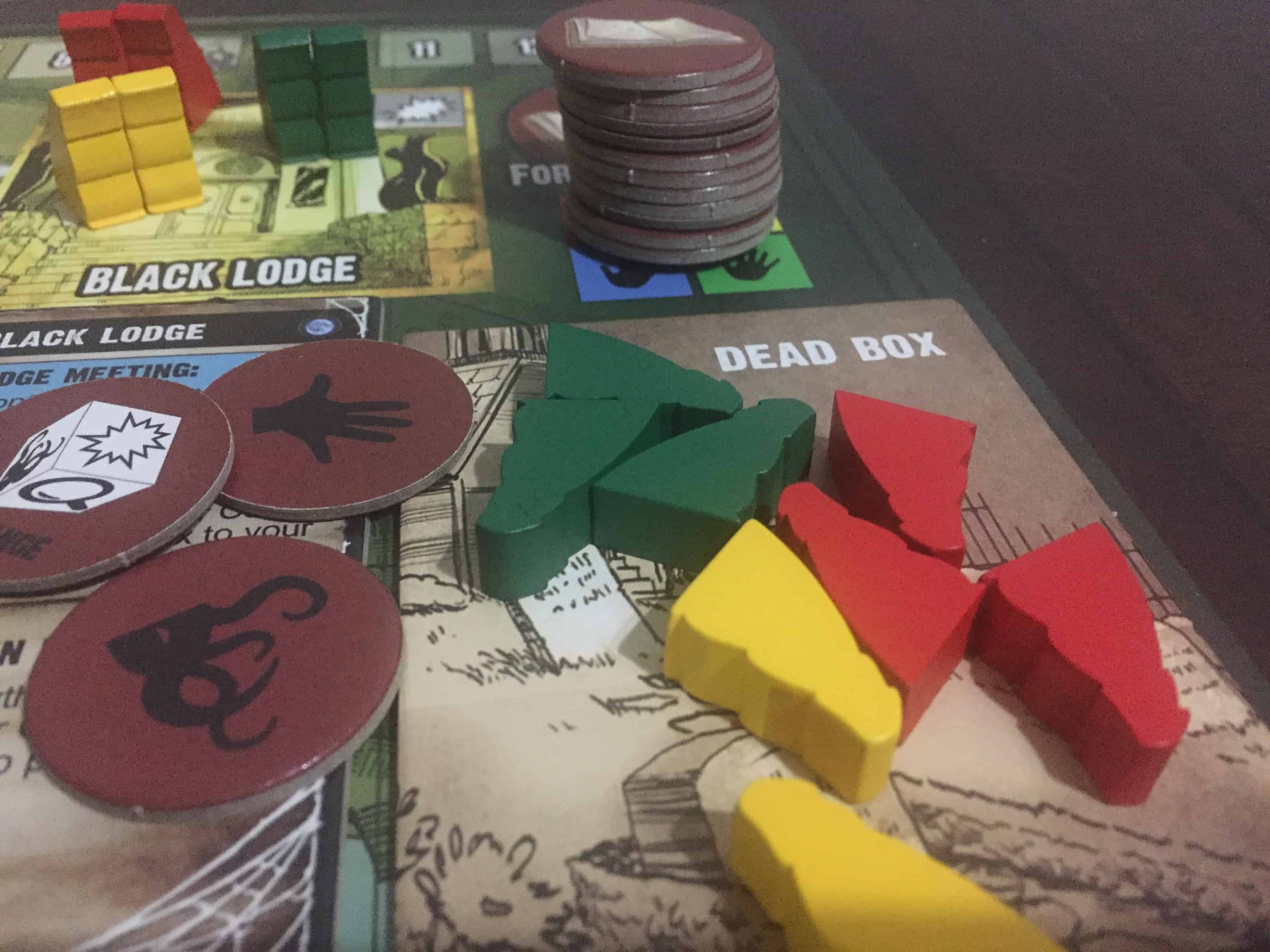
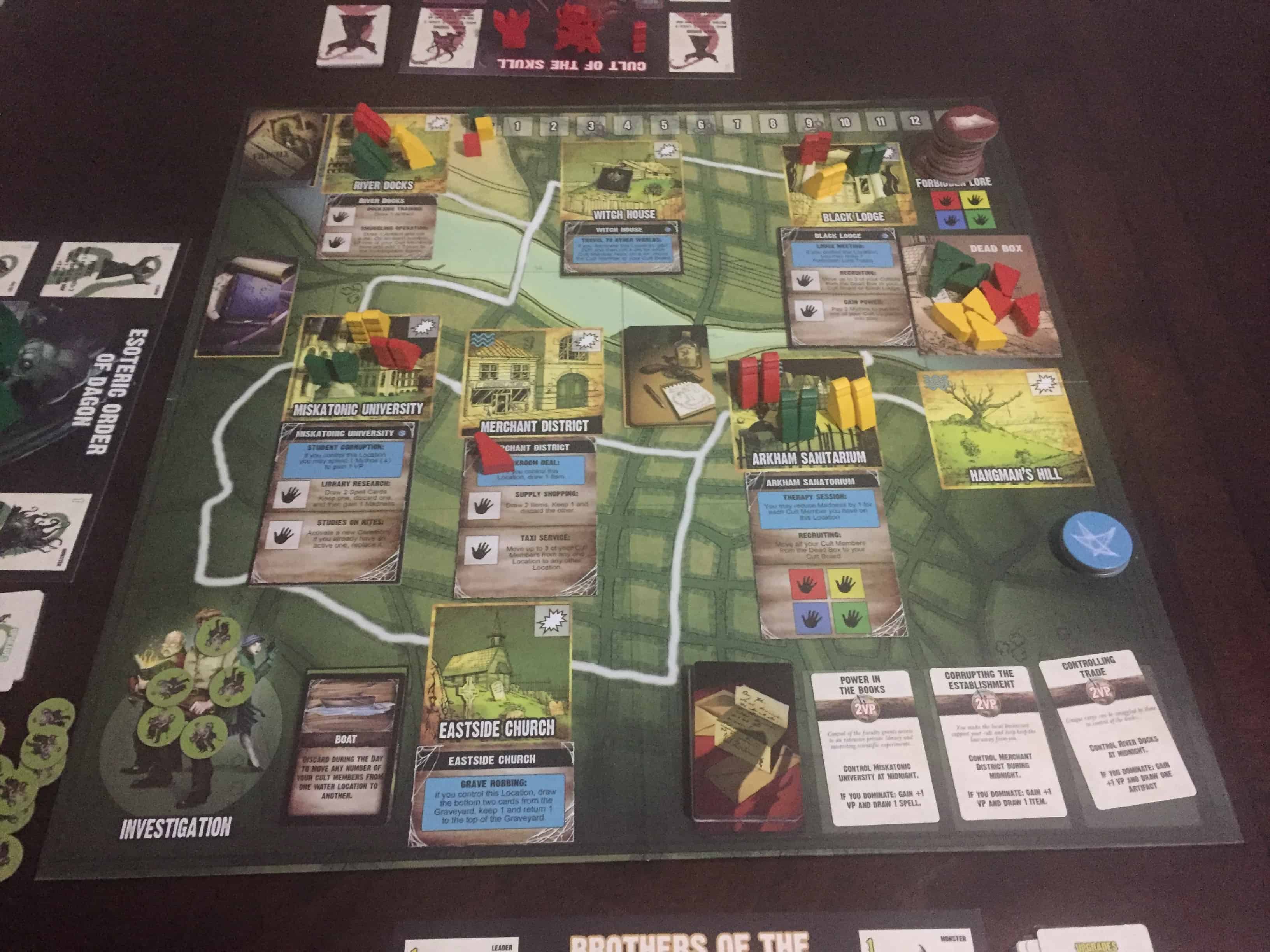
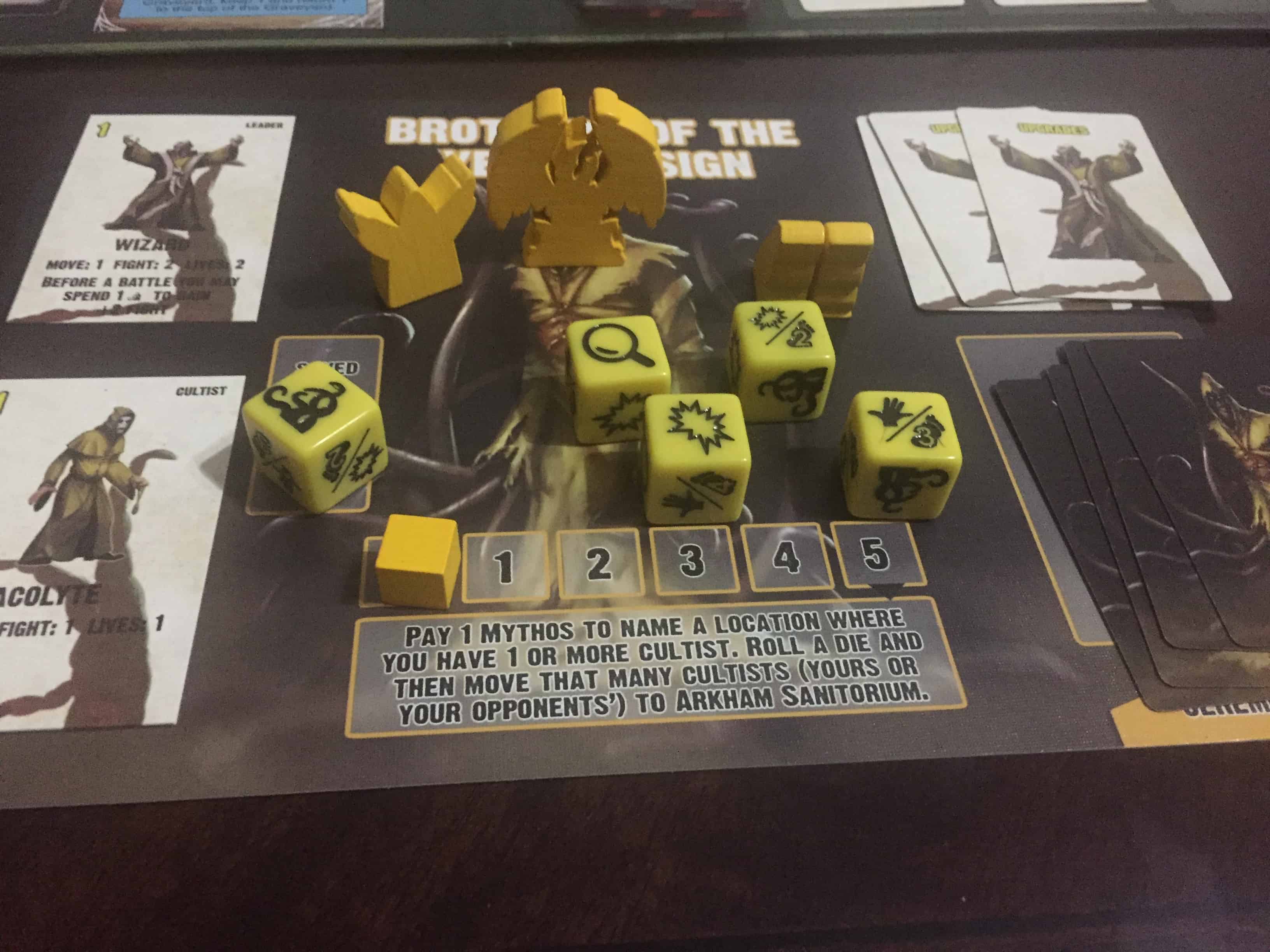
You will begin the game with your player board which displays stats for the cultists and demons that will do your evil bidding. Most of your cultist minions begin the game on various areas of the game board, such as the Arkham Sanitarium and the Black Lodge. You know, the usual suspects in a Cthulhu-verse game. You also have a few in reserve, along with a big monster meeple that you will summon when you want to do some real damage. In addition, you also start with a set of minion upgrade cards that you will play as the game progresses, as well as ceremony cards that act as personal goals for you to complete.
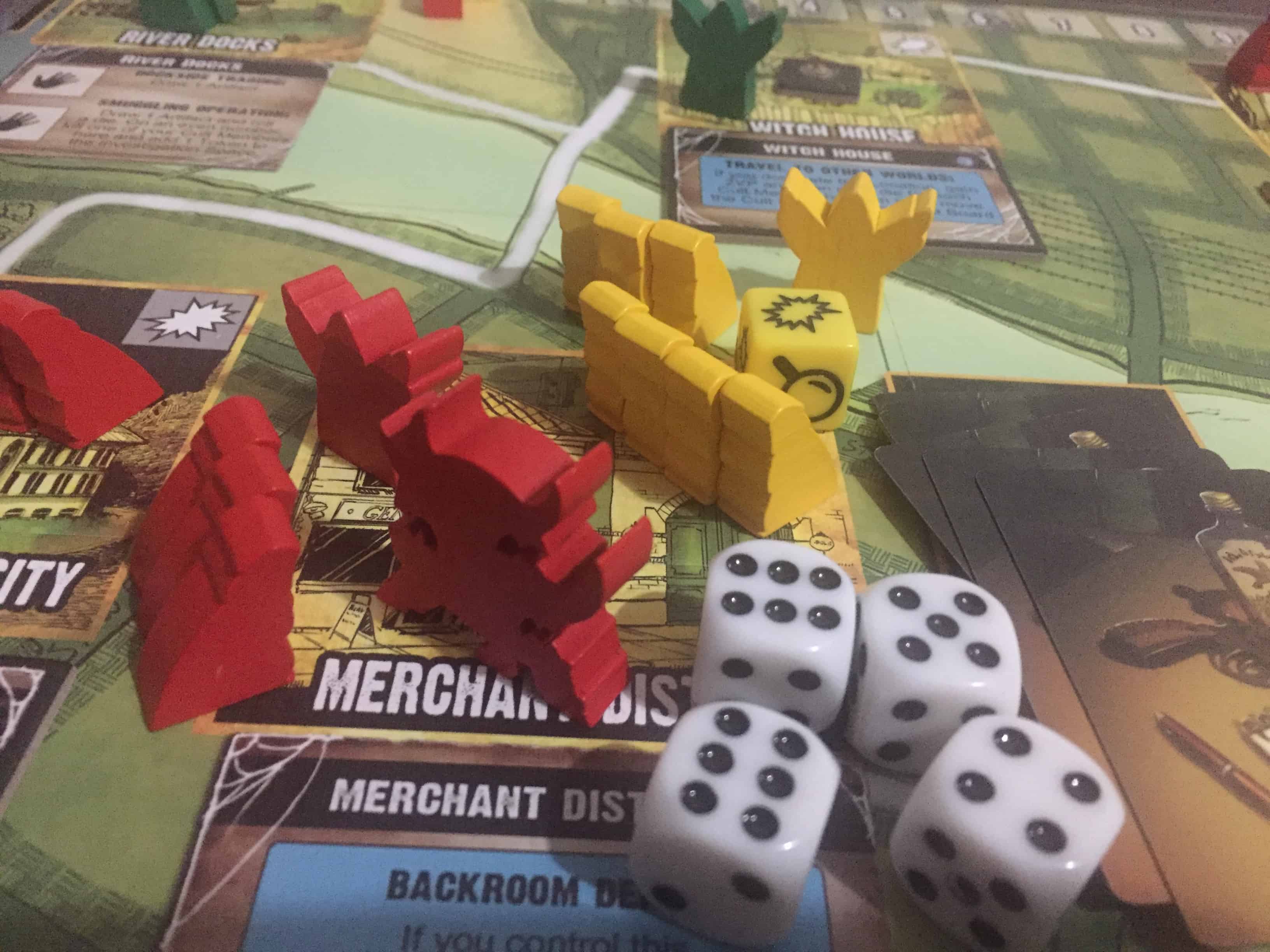
Finally, you get a set of five custom action dice which represent the mechanical core of the game. At the beginning of each turn, you will roll your dice then take turns implementing the actions depicted on the dice. The dice allow you to move your minions, recall them from the grave, perform actions in various spots on the board, or declare fights against your opponent.
Be careful, though, because you have to contend with meddling investigators along with your cult leader opponent. If you roll investigator symbols during your initial die roll, you add tokens to the board that make the little investigator dudes more powerful and/ or more likely to seal off certain areas of the board.
After everyone finishes their actions, the next phase of the game sees cultists and investigators all fight in the streets, vying for control of the different zones on the game map. You resolve combat with … you guessed it… opposed dice rolls! The strategy of the game lies in setting up combats to make sure you roll a lot more dice than your opponent. However, as far as the actual dice rolls themselves, there’s not a lot of mitigation here. Pray to your elder god that you roll lots of 5s and especially 6s (which ‘explode’ and grant rerolls). Various spells, items, and artifacts also help you prepare for battle, as well.
You will get various chances to earn VP along the way, in any phase of the game. You can either work towards personal goals (ceremony cards) or common goals (plots cards). Scoring can happen fast and often in this game. I’ve seen people win in around four rounds – which, by the way, still took an hour or so with four players.
Finally, what Cthulhu game would be complete without some madness? In MaM, your character gets 5 ‘sanity’ points to play with. If you are not maxed out on madness, you can reroll your action dice on your turn. That comes in really handy when you get stuck with, say, not enough movement dice. However, once you max out and become insane, you lose your reroll ability. Instead, you get access to a decently powerful special ability. Will you trade whatever humanity you have left for even more killing powa? Tough choice, indeed.
If you are truly desperate and getting your butt whopped repeatedly, you can take the side of the investigators and try to nudge them to power. When they seal three areas, the person with the lowest VP wins immediately!
What I liked about Madness at Midnight
Madness at Midnight gives you plenty of strategic options on every turn, while still remaining a simple and easy to understand game at its core. While MaM has a high, initial informational barrier of entry (more on that below), my play groups were all able to figure it out and implement different strategies, eventually. Do you slowly build up and concentrate on wreaking havoc with your summoned monster? Or do you try to snipe goal/ ceremony cards quickly and often with just your redshirt cultists? Perhaps one or two optimal strategies would emerge with multiple plays. However, for our groups, we felt free to try and summon our god however we saw fit.
Some folks will label this game a “dice chucker” and move on. To be fair, you roll dice a TON of times in a typical game of MaM. You can earn spells, items, and character power ups that let you add dice to the big roll, or attack first, or do lots of other stuff. Nothing in the game, though, truly protects you from the results of bad rolling. If you load up with 11 dice against your enemy and fail to roll a 5 or 6 on any of them, you’re stuck.
While some might view that as a negative, I respect MaM’s design integrity and found that it was able to contain all of the randomness fairly well. The best players will win this game, more often than not. Further, I found that as we got better at the game, players naturally devoted resources to areas they knew they had great shots at winning and cut their losses in other areas. We had hotly contested zone battles maybe once per 1-2 rounds, either when someone was going for a certain goal card or just felt like breaking Wil Wheaton’s rule.
So, while people might look at this game and say “too random,” I would advise that they take a second look at it.
What I’m on the fence about in Madness at Midnight
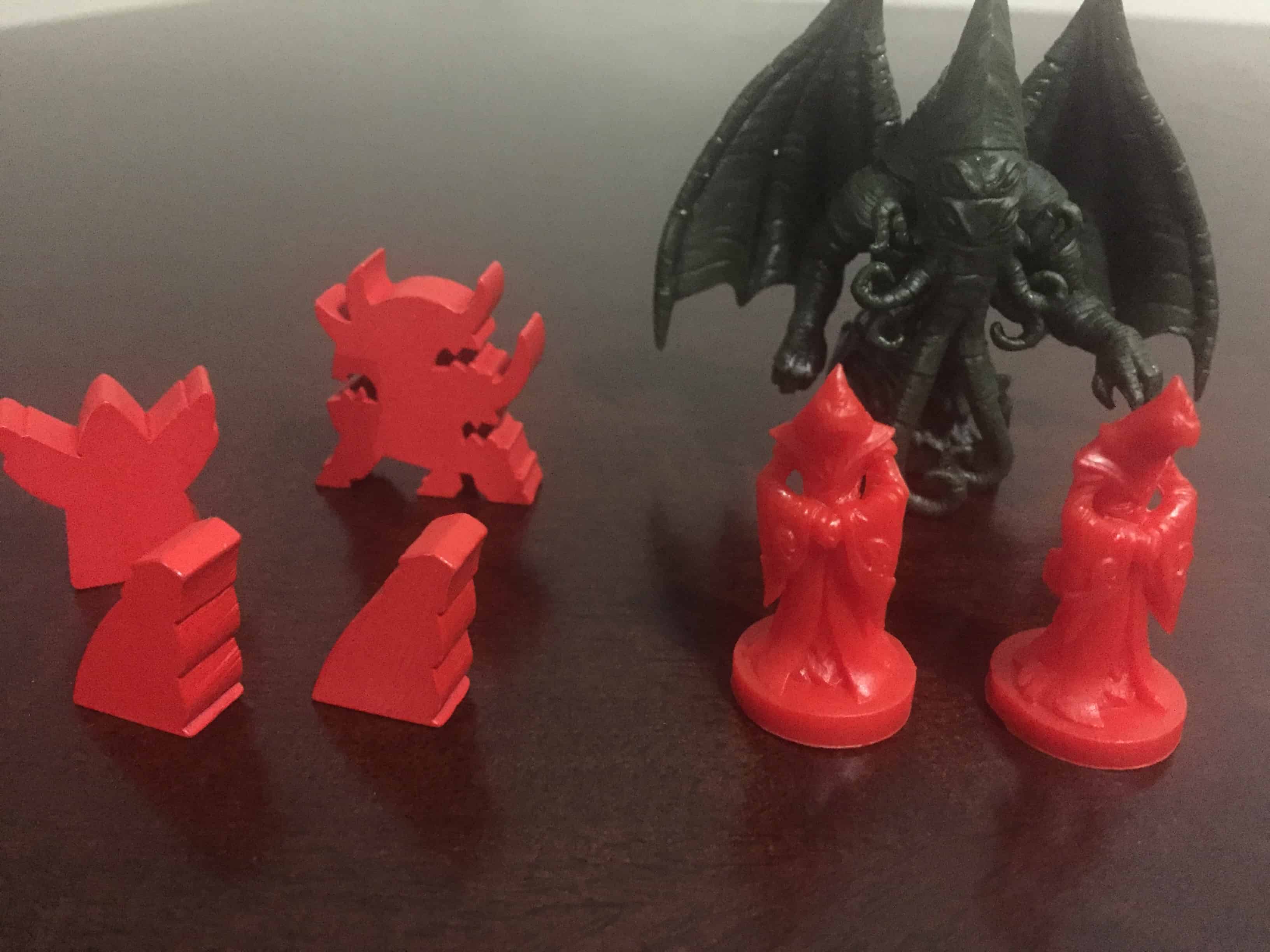
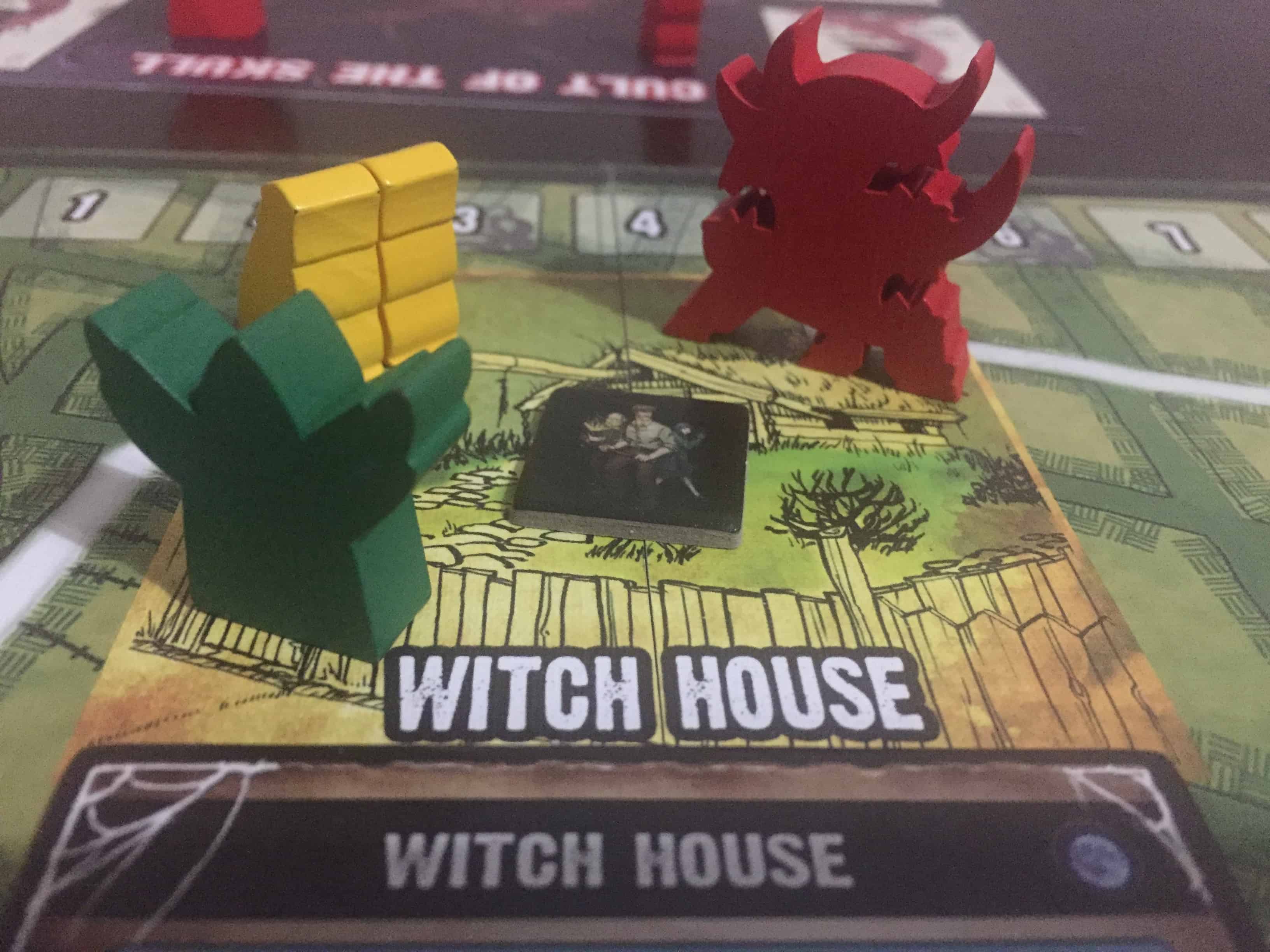
You’re not buying this game for its component quality. The wooden meeples in particular look really cheesy compared to those in Fate of the Elder Gods. However, this game checks in around $15 cheaper than Fate. You’re looking at a difference of $64.99 vs. $79.99 MSRP. A part of me is an old grognard who complains about the rising cost of games. I would therefore feel like a hypocrite if I turned around that knocked this game’s components. I get the feeling the publisher made a conscious decision to include cheaper component quality for the sake of a lower price point.
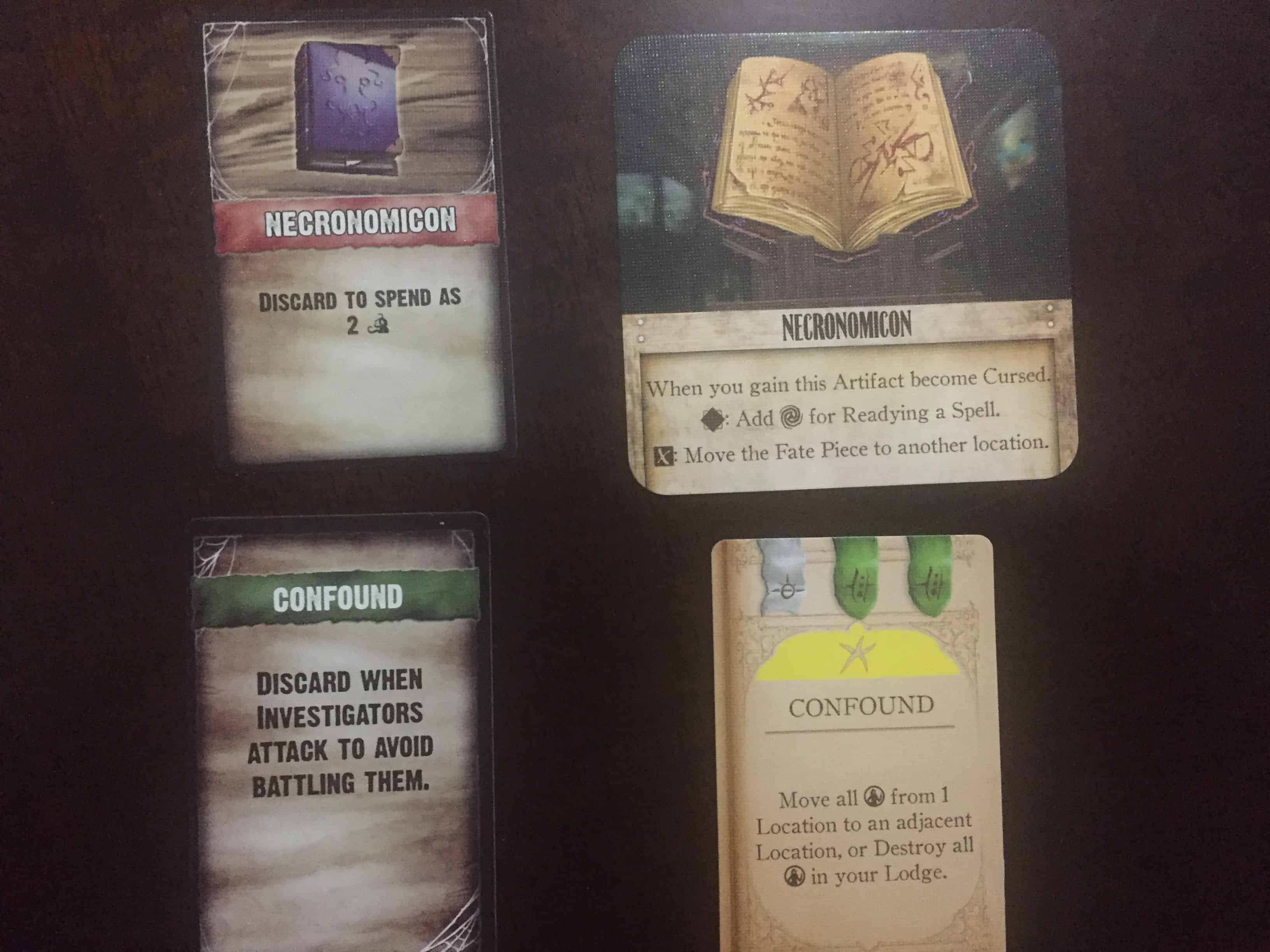
[Madness at Midnight components pictured left, Fate of the Elder Gods components pictured right]
Also, for some reason, the font and graphic design of the action spaces, player mats, and cards reminded me of a 1e D&D module. It gave the game a very old-school look, like it was made in the 80s. Maybe that was on purpose, though!
What I didn’t like about Madness at Midnight
Right from the start, MaM hits players with a ton of info at once. You have to digest text-based info from all of the different action specs, the goal cards, and your personal player board. Veterans of area control or worker placement games might not have a problem here. However, when I laid the game out on the table at my game night, more than a few gamers passed on it. They assumed from appearances that the game was longer and more complicated than it actually is.
Speaking further about accessibility, I didn’t love the rulebook. For example, the rule explaining how to play minion upgrade cards was stuck in the component listing. That’s a terrible place to put a rule that directly affects gameplay, and I only thought to look there when I couldn’t find it anywhere esle (btw, you can play them right after the lead player hits certain thresholds on the VP track). I found a few other cases where the rulebook puts some other rules in weird places, or simply under-explains them.
I don’t have a lot of criticisms of the actual gameplay. At the end of the day, though, I don’t know that MaM does anything truly unique to really distinguish itself from other area control games. You will buy this game and play multiple times because you like both area control and Cthulhu. If you take away the theme, does this game offer anything over similar board games? For example, I recently played the Sons of Anarchy board game. If you own Sons of Anarchy, or a similar area control game, is Madness at Midnight worth owning? Gamers will have to judge for themselves.
Final Verdict
Madness at Midnight strives to walk a tightrope between offering a lot of good strategic decisions while keeping the tension that only pure dice resolution can generate. Although gamers who are truly luck-averse might want to pass this one by, I think others who enjoy equal doses of strategy and luck would be very happy with this game. There have been a few Cthulhu games that have portrayed direct conflict, but none that I’ve seen which does so with the framework of an area control game. If that particular mix of thematic and mechanical elements sounds interesting to you, then you should definitely give this one a try.