

Reiner Knizia is one of the most decorated and prolific game designers of the last 25 years. His games have undergone something of a rediscovery in the last two years as well, with reprints of his biggest hits including Medici, Tigris & Euphrates, Samurai, Ra, Amun-Re, and recent releases and announcements of Modern Art and Through the Desert. So, it’s not surprising that he’s released a brand new, Spiel des Jahre nominated game that few in the west had even heard of before the nominations went out. But that’s exactly what Quest for El Dorado is, and as I recently discovered, it is very much deserving of the accolade.
Embarking on a Race for Treasure
The Quest for El Dorado immediately caught my eye because of its theme. I love exploration games, and I particularly enjoy this theme – reflected by my recent raves for Lost Expedition from Osprey Games. Hacking through the jungle, overcoming obstacles, and racing to be the first to the fabled city of El Dorado is a great theme, and by the looks of the release schedule, is somewhat hot right now.
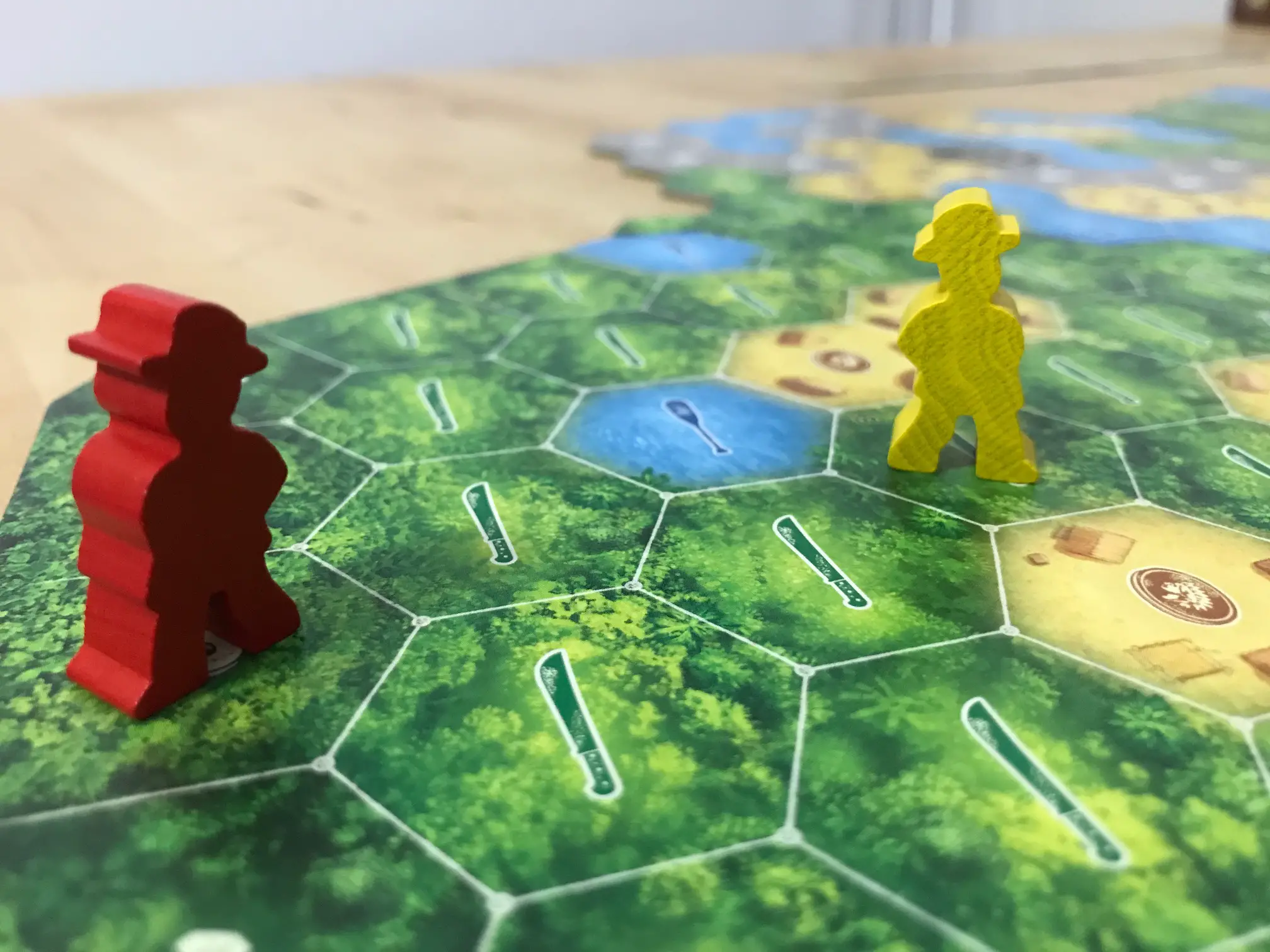
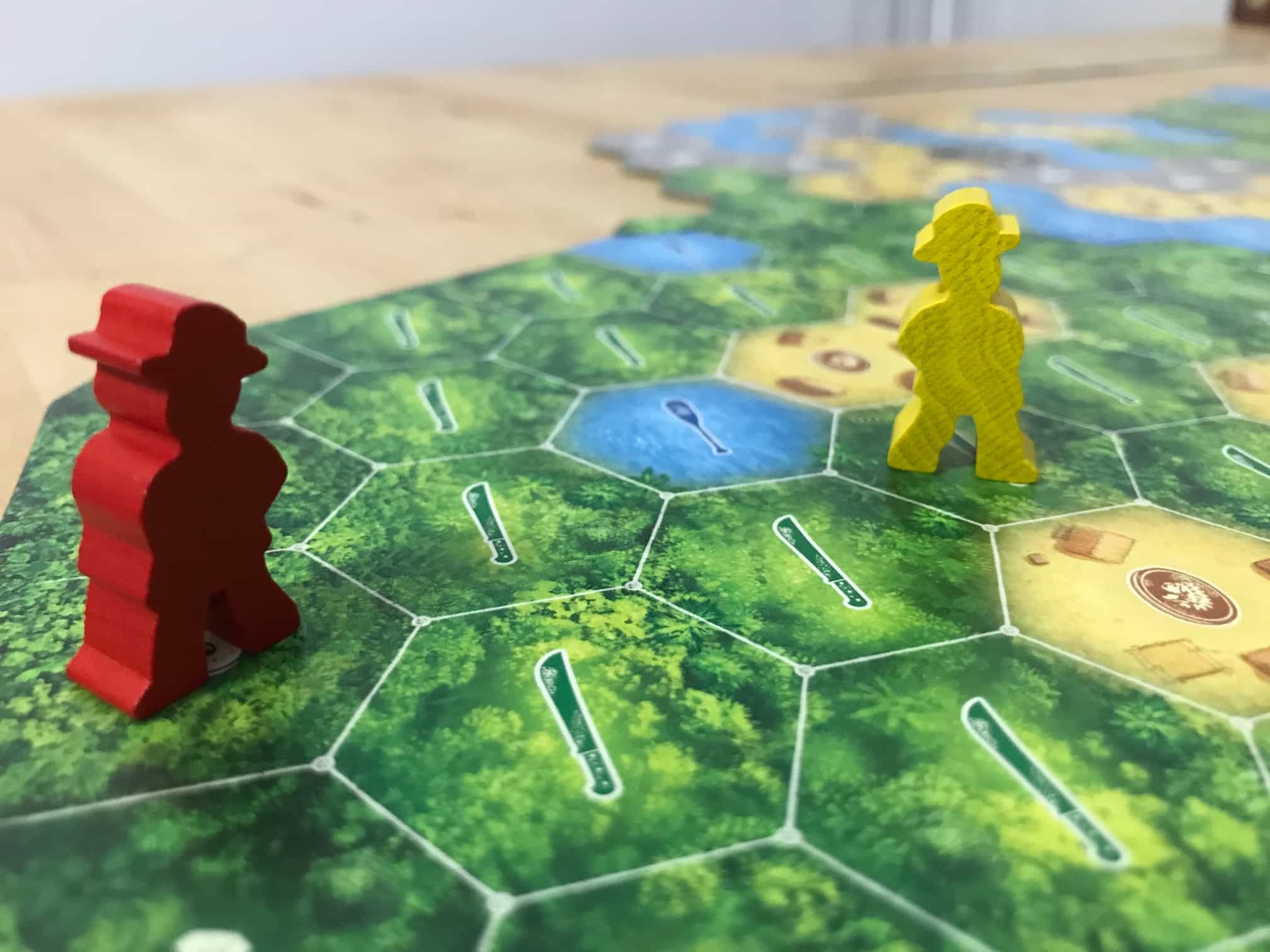
Knizia’s latest is as abstract as you’d expect – players build decks of cards with symbols corresponding to certain terrain types and then play their cards in an attempt to race ahead of their opponents toward the lost city. It’s a race game driven by deck building, with a smattering of modular design to mix things up. The theme could have been just about anything, especially because the air of discovery that you’d expect in a game like this is missing – you know exactly what terrain you’ll be facing as you hack through the jungle from the start.
But it’s a Knizia game, so we have to forgive any thematic gaps – it’s not about immersion; it’s about finely tuned mechanics. And The Quest for El Dorado does a fine job of packing together a game with a solid, well-balanced core.
How The Quest for El Dorado Plays
The goal of The Quest for El Dorado is to move your player figure from the starting line to the temple of El Dorado before anyone else. There are no victory points; just a race to the finish. To start the game, you must build the map – there is a recommended setup to start, but you can set it up however you like with several different layout options in the box. There are 10 jungle tiles to choose from, each double sided, and 8 unique barrier tiles. The box boasts more than 100,000 combinations for the board, meaning the replayability is extremely high, and the way it works out, decks must be constructed differently each time – it really does feel like a different game each time you go through.

So, how do you actually get from start to finish?
You build a deck. To start, you’ll have eight cards in your deck – consisting of several machete cards, a few money cards, and one boat card. Each of these cards corresponds to a different type of terrain on the tiles. These terrain markers have 1+ icons on them and the cards you play must match them to move forward.

So if you want to move to a jungle tile with 3 machete icons on it, you must plays cards that have 3 machetes on them. There are also some other special icons – including rubble that allows you to discard any card, villages that cost money to move through, mountains which are impassable at first, and special tiles that will actually remove cards from your deck.
On your turn you will draw and play four cards, using money cards to purchase new cards from the faceup display. At any time, there are only 6 cards available to purchase. Each stack of cards has 3 cards in it, and when it is emptied, you will pull down another stack from above the market board. These reserve cards can only be moved down when there is an open space, however, so you likely won’t see all the cards in every game.
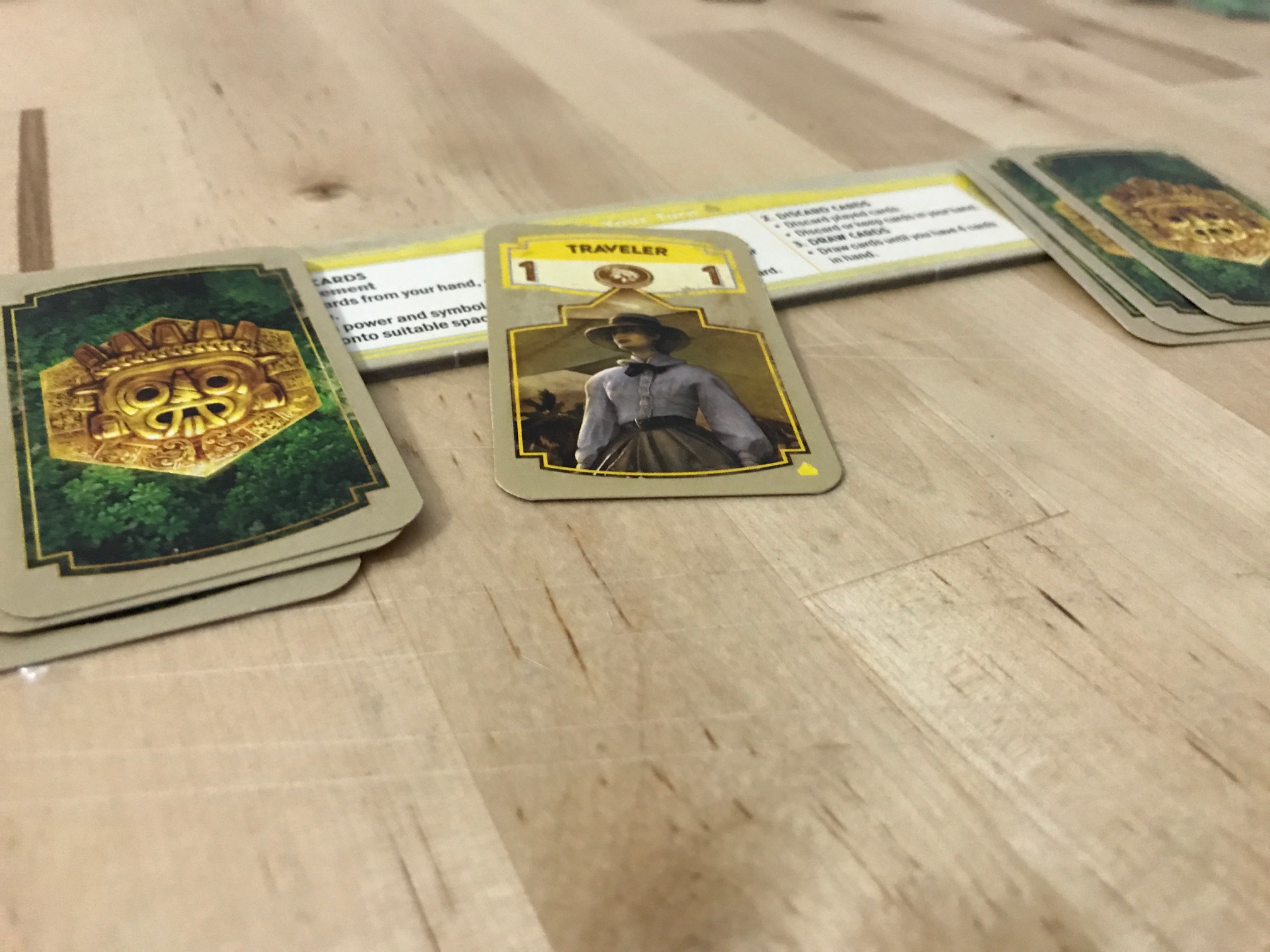
It’s a very quick, streamlined deck building experience in which you need to balance purchasing new cards against using those cards to move through the jungle. If you buy too many cards, your deck becomes bloated and you may get stuck for several turns waiting for the boat card you need to get through the water. But too thin, and you may never get the big machete cards you need to move through the jungle quickly.
What We Like About The Quest for El Dorado
The Quest for El Dorado manages to successful streamline both a standard race game and a deck builder. There is only one currency and only three terrain types, so the number of decisions you need to make is generally fairly simple, but you always have to decide whether you’re going to move forward or hold your cards for purchases.
The number of times you get stuck with little or nothing to do is relatively limited (a common deck building problem), and the catchup mechanic works well, as long as you follow the recommended layouts.

The variability out of the box is probably what makes this game such a unique and interesting experience though. If it had come with only a handful of tiles, it would get old fast and be somewhat solvable. You’d know which cards to buy and when and how many you need in your deck to get through certain sections. The fact that you can reverse tiles, rotate them, swap them out, add in extra obstacles, upgrade the mountains with additional resources. There is a LOT of variability in this box – so much so that the game never truly needs to feel stale. The only thing I feel there could have been more of is the cards for purchase in the market, but even then, they don’t all come out every round – and they could easily add more through expansion or promo.
The speed of this game is another huge plus. Race games should never take more than an hour or so to play, and El Dorado doesn’t overstay its welcome either. Every game I’ve played has been an hour or less, and no player has been more than 1 turn behind to win the race. It’s often tight and there have been several ties, which are decided by how many barrier tiles each player has collected (being first to pass between any two given tiles).
What We Don’t Like About El Dorado
While the variability, balance of the cards, and layout of the game means it is generally a smooth, fair contest – it’s possible to get stuck for an extended period of time. Like any deck building game, if you buy too many cards and thin your deck down, or if you don’t buy the cards you need for later parts of the game, you can end up in a situation where you don’t get what you need to get past certain obstacles. This can be frustrating, but is usually avoidable if all players are taught early to review the map and take not of what they will need in future turns.
In terms of components, everything is solid with sturdy boards, explorer meeples and personal player boards, but they opted for the Ticket to Ride sized cards, which doesn’t matter for text (since it’s all icons), but I can’t help but point out when a game has these tiny cards – I’m almost never a fan.

Theme is certainly not particularly strong here either. It looks great and it feels like a solid race, but it could have been just about anything – you’re matching symbols on cards to symbols on the map and that’s about it. I like what they chose, but it doesn’t necessarily feel like you’re hacking through a jungle any more than skiing down a mountain.
Nonetheless, like I said, it’s a Reiner Knizia game and I didn’t expect a strong theme. What I did expect was a solid implementation of mechanics in an easy to understand package and that’s exactly what The Quest for El Dorado is.
The Bottom Line
The Quest for El Dorado is a quick, accessible, and highly replayable race game that manages to capture the essence of both deck building and streamlined race mechanics in a game that is perfectly suited for the Spiel. I honestly wouldn’t have been disappointed or surprised if it had won the Spiel des Jahre over Kingdomino, a game I like but that is almost too light for the category.
This is a fantastic game and with tens of thousands of layout combinations, it’s one you can continue playing for a long time to come. The Quest for El Dorado is available at Gen Con this year from Ravensburger. Check it out!
