

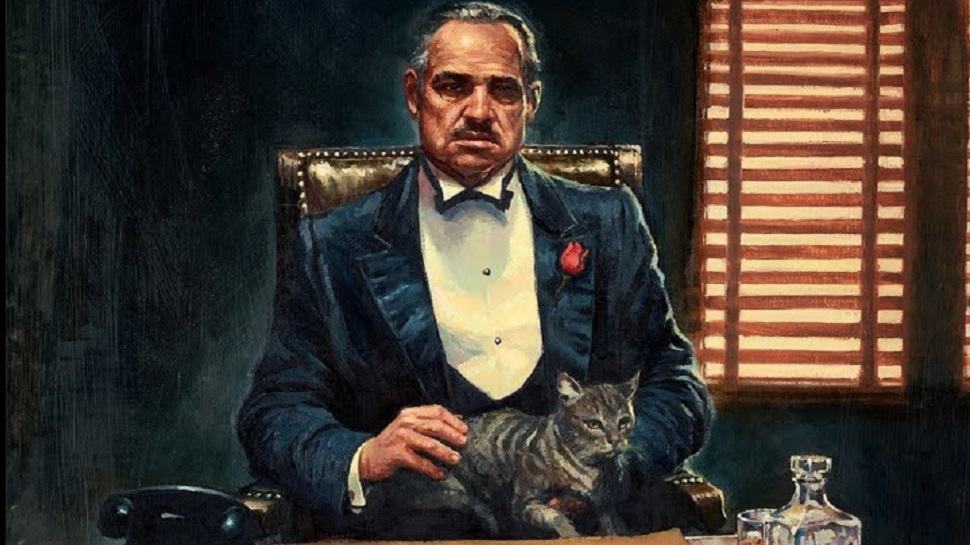
On the last episode of Board Gamers Anonymous, Anthony reviewed The Godfather: Corleone’s Empire, designed by Eric Lang and published by CMON. He gave this otherwise solid game a tepid review because (without actually using the term) he felt it was “overproduced”.
It got me to thinking – when can we judge that a game is “overproduced”? Is it even possible to overproduce a game, considering that we are in a hobby where we are basically playing with toys? Don’t we want our toys to look and feel their best?
I’m wading in highly subjective waters, I know. I do believe, though, that we could think about some standards for making real assessments as opposed to snap judgments. I propose that an “overproduced game” has beautiful game elements that
- do not prompt a player to become more deeply immersed in the game, whether in terms of theme or tactics, and
- drive up the price of a game while not delivering increased gameplay depth or fun along with it.
That’s the TL:DR version. I have some extended thoughts (I know, I know, when do I not have extended thoughts?)
What’s the point of minis?
In board gaming nowadays, when someone complains about overproduction, they are usually talking about minis. 
Check out these snazzy minis from The Godfather game. You don’t see that level of detail in most miniatures games, unless you’re talking about some Warhammer sets. CMON didn’t put these in the Godfather out of the goodness of their hearts; they make us pay for these beauties to the tune of $79.99 MSRP.
Detailed miniatures like this contribute exactly one thing to the board game experience: immersion. Playing with minis helps bring you into the imaginative headspace of the game.
This can happen in two ways.
- Thematic immersion – I think this one’s fairly obvious. It’s easier to help players imagine they’re in a story when gangster minis, or minis of great Greek gods, or whatever, stare at them in the face.
- Tactical immersion – This one might be less obvious. Detailed minis help players mentally sink into a game in such a way to facilitate “seeing” the board and the combatants (no accident minis were bequeathed to us by war games). That gives our imaginations more tools to imagine and anticipate moves, which clearly affects gameplay.
Here’s an example from one of my favorite book series, A Song of Ice and Fire
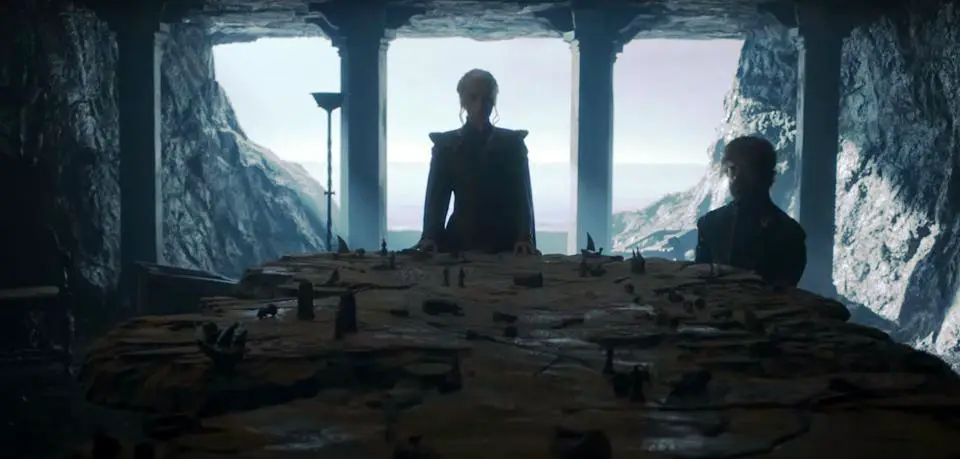
Is this table “overproduced?” In the series lore, Aegon the Conquerer built this table around 300 years before the events of the book, and before he conquered the Seven Kingdoms. He brooded at this table for hours, days, months, planning his assault. Could he have done it with the same level of depth and care in front of a chintzy board with some parchment standees? I don’t think so.
(end tangent)
The Godfather is a worker placement game. These types of games deliver a tactical experience, but in a different way than a game with direct combat. The minis don’t move across the field in a worker placement game – they just kind of appear and disappear. Therefore, I argue that beautiful minis in a worker placement game, while they may bring out theme, do not help players improve their in-game tactics.
So, obviously, the minis in The Godfather encourage thematic immersion. However, if CMON was so concerned about that, then why is the card art pretty much all the same? Does Vito Corleone always have to have that cat in his lap in order to give an order? I feel that whatever immersion the minis create in the game gets broken by the cards.
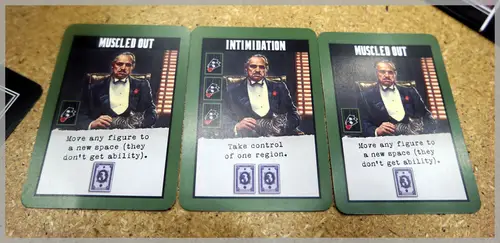
Knowing CMON as a company, they put the minis in the game for a host of reasons that don’t have a lot to do with the gameplay itself. There’s the branding element – the “M” in CMON stands for Mini, so their games just have to have minis. Second, I can imagine fans of the IP would show the minis to their friends, or display them in some fashion.
I think a game veers firmly into “overproduced” territory when the reasons for including detailed game elements (minis, art pieces, etc.) range outside the scope of the gameplay itself,
Expectations Created by Price Point
I always want to get my “money’s worth” when I buy a game. I might tackle the definition of “money’s worth” in another blog. For now, I just want to focus on broad parameters of price relative to production and game weight.
- For a card game, I think we’re comfortable paying around $20 or so. I regard games that are even cheaper like Sushi Go, Red7, Codenames, or (on the heavier side) the Castles of Burgundy Card Game as outstanding deals.
- For board games on the lighter side, ranging from family weight to medium strategy, I’d say somewhere we’re good with games in the $40-$50 range. The current big ticket games fall into this category – Pandemic, Carcassonne, Ticket to Ride, Lords of Waterdeep, etc.
- For heavier, meatier board games, we’re looking at $60 bucks or so. Recently, a lot of these games have crept into the $70 range, which I don’t like! Darn you, inflation! Think Terraforming Mars, Pandemic Legacy, etc.
- For any price beyond this, we have come to expect BOTH rich, involved gameplay as well as high levels of production across all components, not just the minis. At a cool $99.99 MSRP, Star Wars: Rebellion sets a great standard in that it ticks both of these boxes. Aside from getting a lot of stuff that all looks awesome on the table, you can get engrossed in the gameplay and happily lose many hours playing.
On the podcast, it sounds like Anthony came to the judgment that The Godfather’s price point falls into category 4, while gameplay falls into category 2. On that basis, Anthony would come to the judgment that the Godfather is “overproduced” (again, that’s me shoving the word in Anthony’s mouth. Taste it, Anthony!)
Conclusion
Like I said in the intro, gamers can take every single thing I’ve written here with a massive grain of salt. It’s your money. You might be perfectly satisfied spending $90 on a game you didn’t love, but you just think the minis are super cool. Go for it!
However, I hope my two standards can help people to use the term “overproduced” in constructively critical ways, rather than just as a haphazard insult.
